




I had a conversation recently with a naturopath who specializes in eczema. She works with clients of all ages, from young children to adults, and she’s one of those practitioners who thinks carefully about every variable in her clients’ lives. Diet, environment, stress, sleep.
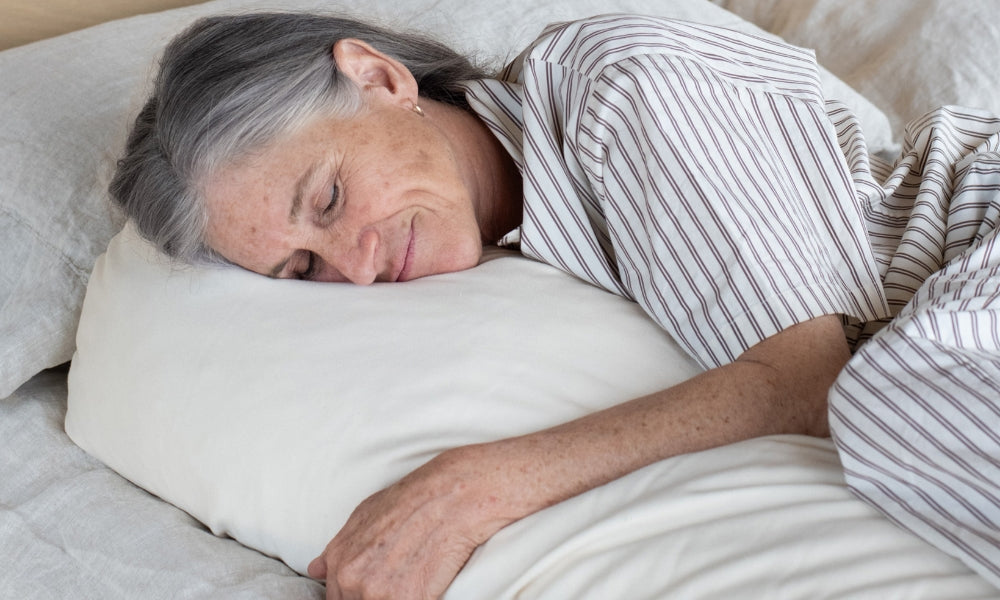
When sleep came up it sent me looking for answers I didn’t have. What I found surprised me. Symptoms consistently worsen at night. The itching intensifies. The scratching starts. The sleep that should be the most healing part of the day becomes the hardest part instead.
She knew temperature was a factor, and was already thinking carefully about the sleep environment. This article is my attempt to go deeper.
Why Nights Are Harder
Eczema flares at night for several reasons and temperature sits at the centre of most of them. Research shows sleep is disrupted in up to 60 percent of children with eczema, rising to 83 percent during a flare. In adults the numbers are similarly significant.
The skin’s temperature regulation system is often compromised in people with eczema. When the body can’t manage heat efficiently through the skin, warmth builds up, sweat follows, and the itch-scratch cycle takes hold. What someone is sleeping on either helps that process or actively works against it.
Most mattresses actively work against it.
Start With the Room
Before we even get to the mattress, the room itself matters more than most people realize.
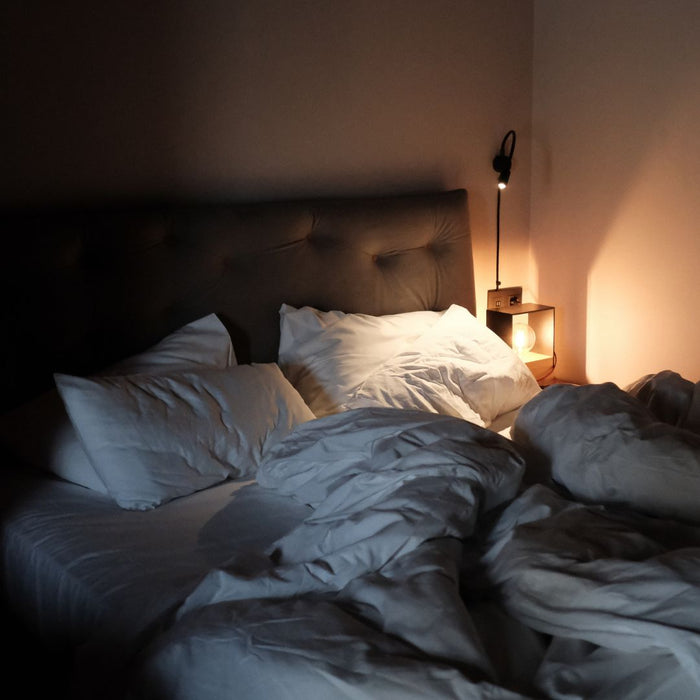
Research consistently points to a bedroom temperature of around 18 degrees Celsius as the sweet spot for deep, restorative sleep. Your body needs its core temperature to drop in order to initiate and maintain sleep. A room that’s too warm interferes with that process, forcing the body to work at cooling down instead of resting deeply.
For most people that means a room that feels slightly cool, not cold, but noticeably cooler than the rest of the house. For someone with eczema it means even more. A skin barrier that already struggles to regulate heat is particularly vulnerable to a warm environment. Two degrees above that threshold and the skin is actively reacting.
Most families with eczema children have never been told this. They’re adjusting creams and diets and detergents while sleeping in a room that’s 21 or 22 degrees. The room is doing damage every single night.
The Foam Problem
The mattress industry has spent the last two decades moving almost entirely toward synthetic foam. Memory foam became the dominant material, marketed relentlessly on comfort and pressure relief. What doesn’t get talked about is what foam does with heat.
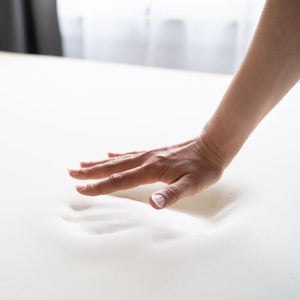
Synthetic foam traps warmth. It doesn’t breathe, and it holds moisture against the body through the night. For someone with healthy skin that’s not ideal. For a child with eczema it’s a genuine problem.
The same logic applies to synthetic pillow and duvet fills. Especially feather down, which often surprises people. Down has a premium natural reputation and in many ways deserves it. But down traps the body’s own heat and oils against the skin in ways that are particularly problematic for eczema sufferers. Breathability matters more here than perceived luxury.
What Natural Materials Do Differently
Natural latex, the kind tapped from rubber trees rather than synthesized, has a fundamentally different structure than foam. It’s open cell, meaning air moves through it rather than getting trapped. It doesn’t hold heat the same way. It’s also naturally resistant to dust mites and mold, two of the more common environmental triggers for eczema.
Wool is worth understanding here too. As a fill material inside a mattress or duvet layer it is one of the best natural thermoregulators available. Each wool fibre is hydrophilic on the inside and hydrophobic on the outside, meaning it pulls moisture vapour away from the body before it ever becomes sweat sitting on the skin. It buffers temperature changes through the night and resists the damp microenvironment where dust mites thrive.
Together natural latex and wool create a sleep surface that works with the body’s temperature rather than against it.
The Family Bed and the Crib
Naturopaths who work with eczema patients are increasingly asking about the full sleep environment, and the co-sleeping question comes up more than you might expect. Parents who share a bed with a child who has eczema are sleeping on the same surface, and the material question applies to the whole family.
A natural latex mattress with breathable organic layers serves everyone in that bed. The child gets a surface that isn’t trapping heat against their skin. The parent gets a mattress that isn’t off-gassing synthetic compounds into a space where everyone spends eight hours.
For cribs the principle is identical.
One thing worth saying clearly. The natural mattress space has a greenwashing problem. Claims of natural materials don’t always mean what they appear to mean. Third party certifications matter, and a transparent manufacturer who can tell you exactly what’s in their product is worth the additional investment.
It’s the Whole System
A mattress is a starting point, not the complete answer. The pillow, the duvet, the layers closest to the skin all contribute to the thermal environment a child sleeps in every night. A natural latex mattress under a synthetic duvet is still a compromised system.
The goal is a bedroom that breathes from the bottom up. That’s a process, not a single purchase. But the mattress is the right place to start because it’s the largest contact surface, the hardest thing to wash, and the one that stays against the body all night long.
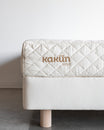
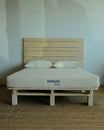
At Resthouse we’ve been building sleep systems around natural materials for over a decade. The Kakun is our flagship mattress, natural latex core, wool and cotton layers, certified materials throughout. It’s built to breathe.
If you’re a practitioner working with clients who have eczema and you haven’t thought about what they’re sleeping on yet, it might be the most useful question you haven’t asked.
Written by Chris Manley
Founder of Resthouse Sleep