














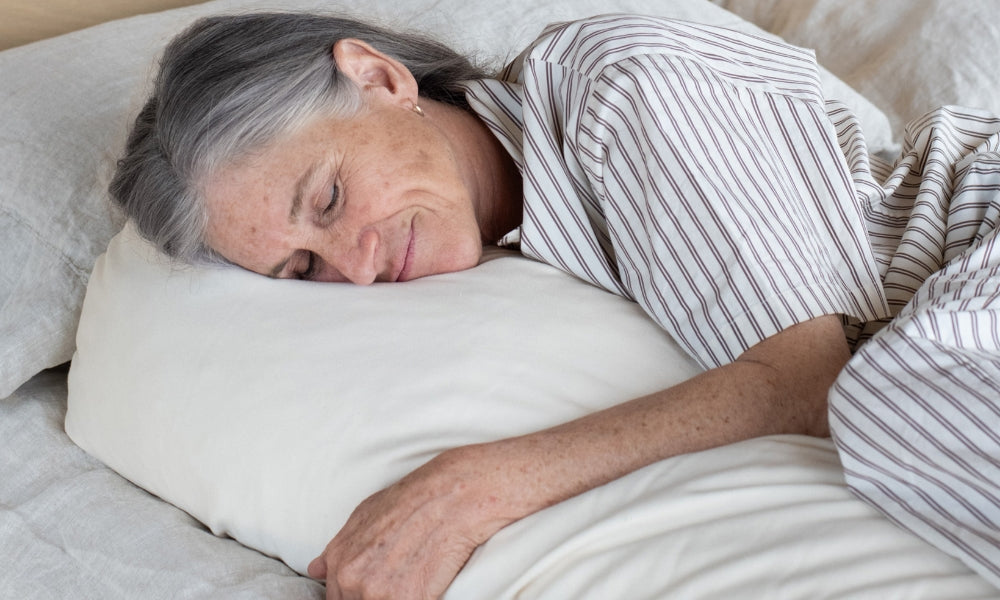
When people think about injury recovery, the focus is generally on movement during the day, such as stretching, manual therapy, and strength work. What’s often missed is the 6–8 hours where all of daily physical work translates into real, lasting recovery.
Sleep is when the nervous system resets, muscles release, hormones regulate, and tissue repair begins. But that only happens if the body is in a position where it can. If a healing body isn’t properly supported through sleep then posture collapses, circulation is obstructed, tension builds, and recovery is limited.
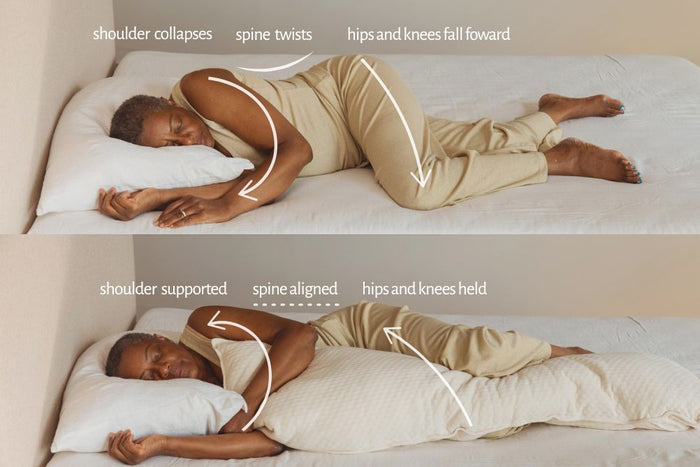
With most adults primarily sleeping on their side, spinal twisting often leads to frequent sleep disruptions, and daily discomfort. And for individuals undergoing physical therapies or recovering from injury, it may be too painful to sleep without the right support. The issue isn’t side sleeping itself but unsupported side sleeping, which can cause:
- The top leg to drop forward, pulling the pelvis into rotation
- The upper shoulder to collapse inward
- The ribcage and spine to twist as the limbs drop
- The neck to adjust to try to keep the head level
This is where tension, pain, and twisting can hinder recovery and potentially negatively impact the therapeutic work done during the day.
What a Body Pillow Changes
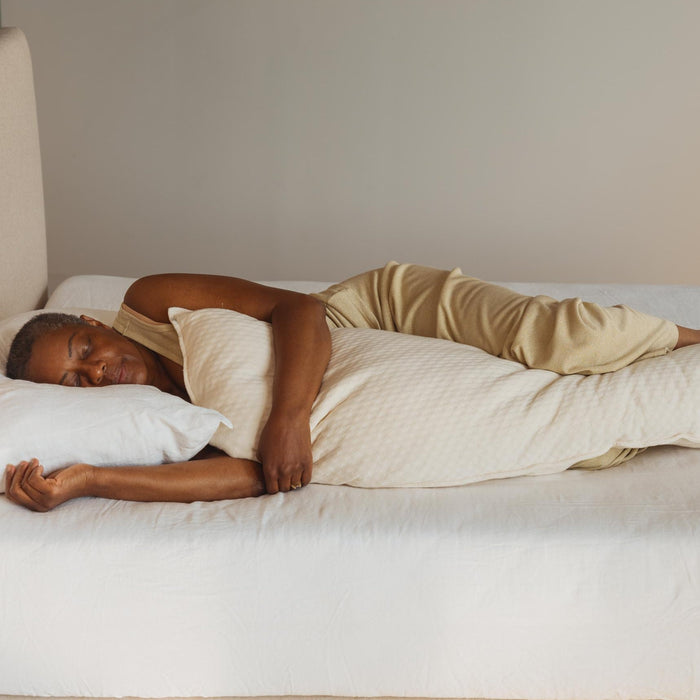
A body pillow adds another level of comfort, but it isn’t just about that, it also eliminates pressure on the spine and limbs by ensuring the body is fully supported in an ideal neutral posture.
- The top leg is supported, allowing the pelvis to stay stacked
- The torso stays aligned instead of rotating
- The shoulder can relax without collapsing
- The spine can remain neutral without effort
A body pillow doesn’t replace treatment, but it does enhance it, without any complex intervention. The goal is to reduce the need for the body to hold itself together overnight.
It’s one of the most effective ways we can support deeper, more comfortable sleep for better, longer-lasting recovery results.