

















RESTHOUSE SLEEP · EST. 2014 · SERIES: THE CORE SIX · ARTICLE 05 OF 06
There’s a reason spooning exists.
Nobody invented it. Nobody published a study recommending it. Couples have been doing it for as long as there have been couples, simply because the body figured out something long before the sleep industry did. Being held while you sleep feels better. You fall asleep faster. You feel safer, you feel held.
The person on the outside of the spoon is, without knowing it, getting almost exactly what we’ve spent four articles describing. Their top leg is supported by their partner’s body. Their upper shoulder is braced. Their nervous system is receiving the signal it needs to fully let go. For many people, it’s the best sleep they get.
The problem is it doesn’t last. Temperatures rise. Someone needs to roll over. Sleep cycles fall out of sync. One person is a light sleeper, the other isn’t. The arrangement that felt perfect at 10pm has quietly dissolved by 2am, and usually neither person knows exactly when it happened or why they woke up.
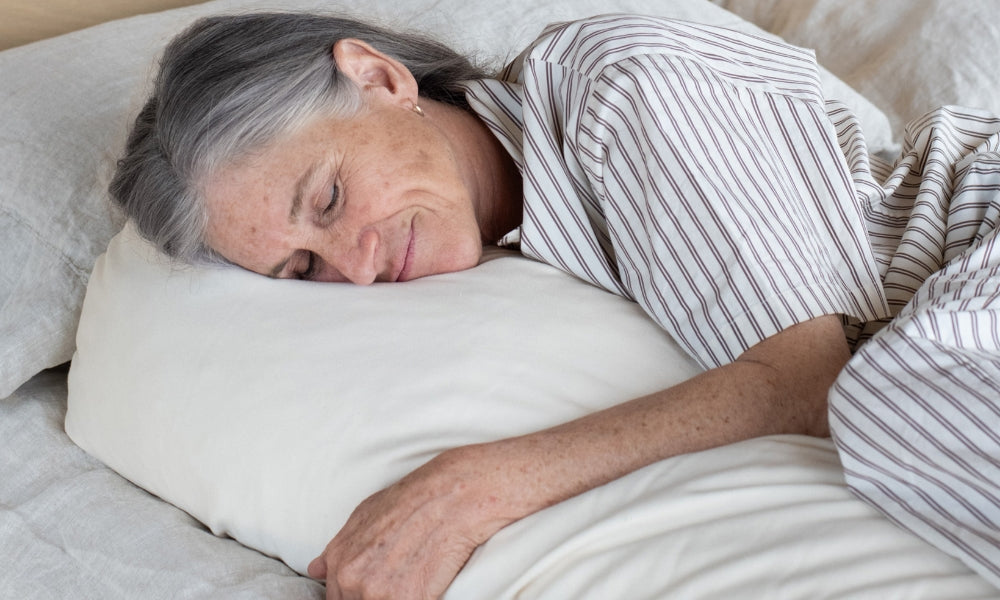
The body pillow is what spooning is trying to be. The warmth and containment without the logistics. The support without the disruption. The held feeling, all night, fitted precisely to your body.
That’s what this article is about.
Two Jobs, Not One
We’ve talked throughout this series about what sleep setup needs to do for the body structurally. The right pillow height keeps the neck neutral. The body pillow stops the gravity collapse sequence. The mattress surface needs to support the body without creating uneven impressions over time.
All of that is real and important. But it addresses only one of the two jobs a sleep environment needs to do.
The first job is structural, keeping the body in alignment so the spine, shoulders, and neck can decompress and recover through the night.
The second job is neurological, getting the nervous system out of its alert state and into the condition it needs to be in for genuine rest.
Most of the sleep industry addresses the first job, partially and imperfectly. Almost none of it addresses the second. And for a significant portion of the population, the second job is the harder one.
The Nervous System Doesn’t Have an Off Switch
For people whose minds never stop moving, lying down is not the same as letting go.
The body is horizontal. The eyes are closed. And the nervous system is still running. The mind is still cataloguing the day, planning tomorrow, replaying conversations, generating the low-level hum of alertness that has been its default state since morning.
This is not a character flaw or a sleep disorder. It is the nervous system doing what it has been trained to do; stay ready, stay responsive, keep the engine running. For many people it is also what makes them effective, creative, and productive during their waking hours. The same wiring that drives high performance during the day makes genuine rest harder to access at night.
What the nervous system needs, in order to transition from alert to rest, is a signal it can trust. A physical signal. Something the body can feel that tells it, at the level below conscious thought, that it is safe to relax.
Sustained, gentle pressure is one of the most reliable signals available.
What the Hug Actually Does
When the body receives sustained, gentle pressure across a significant surface area, the kind that comes from being held, from a weighted blanket, from a body pillow positioned along the front of the torso, the parasympathetic nervous system activates.
The parasympathetic nervous system is the counterpart to the fight-or-flight response. Where the sympathetic system accelerates, heart rate up, muscles tensed, mind alert, the parasympathetic system decelerates. Your heart rate slows. Breathing deepens. Muscle tension releases. The body shifts from ready to restore.
It is a physiological response to physical input. The nervous system is not being persuaded. It is being triggered by the oldest signal in the human body’s vocabulary. The signal of being held.
Infants are soothed by being held. Adults respond to the same input. The nervous system doesn’t outgrow its sensitivity to containment. It just stops receiving it as regularly as it once did.
The weighted blanket category has built an entire industry on this principle. Deep pressure stimulation, sustained pressure distributed across the body, has been documented to reduce cortisol, slow heart rate, and improve sleep onset and quality across a wide range of populations. The body pillow works through the same mechanism, with the added benefit of supporting the body’s structural alignment at the same time.
Alignment and neurological release, together, in the same object. That’s what makes it different from every other sleep intervention.
The Permission
There is a moment, when the body pillow is right and the position is right, that is hard to describe clinically but immediately recognizable to anyone who has experienced it.
It is the moment of letting go.
The falling asleep comes after, this is the moment before, when the day stops having a claim on you. When the body, supported and held, stops bracing. When the mind, receiving the signal that everything is in order, stops its forward reach into tomorrow.
For people who live at high velocity, this moment doesn’t come easily or automatically. The day doesn’t end when the lights go out. The nervous system needs help making the transition.
The body pillow provides the physical conditions for that transition. But there is also a practice to it, something that develops over time as the body learns to associate the position, the support, and the held feeling with release.
Pulling the pillow close. Finding the position. Feeling the support settle into place. And then, consciously or not, giving yourself permission to stop. Your day is done. You’ve done good work. Now let go.
That permission, the felt sense that it is safe to release, reinforced by physical support, is what separates sleep that restores from sleep that merely passes the hours.
Who This Matters Most For
This dimension of sleep matters for everyone to some degree. But it matters most for specific groups of people who have often been underserved by the sleep industry’s conversation.
People with high-energy or high-stimulus nervous systems, whether that’s formally identified or simply a mind that runs hard, often have a wider gap between lying down and resting. The transition that happens naturally for some people requires more deliberate conditions for others.
People carrying anxiety, chronic or situational, often experience the quiet of the bedroom as an amplifier rather than a relief. The nervous system, no longer distracted by the demands of the day, turns its attention inward. Physical containment can interrupt that pattern in a way that mental effort alone cannot.
People going through periods of high stress, and this is most people at some point, find that the nervous system’s alert state persists long past the point where it’s useful. The body holds the stress even when the mind has nominally let it go.
People who sleep alone, and who have lost the physical contact that comes with sharing a bed, often experience a degradation in sleep quality that they can’t fully account for. The nervous system misses being held. It’s a physiological reality, not just a sentimental one.
For all of these people, the body pillow addresses something that no mattress, no firmness level, and no sleep supplement can touch.
The Full Picture
We’ve now covered, across five articles, the complete system of what good sleep actually requires.
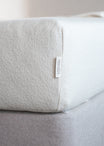
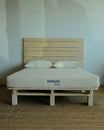
A mattress that is built to last, flippable, made from natural materials, and is fitted to the bodies sleeping on it rather than chosen by a generic firmness category.
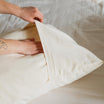
A head pillow adjusted to the specific gap between your head and the mattress, your shoulder width, your sleep position, and your neck’s neutral point.
A body pillow that interrupts the gravity collapse sequence at its source, supporting the leg, bracing the torso, keeping the shoulder back, and the spine aligned.
And the held feeling. The hug. The physical signal that tells the nervous system it is safe to rest, so that the hours you spend in bed are doing the restorative work they’re supposed to do.
The body has known what it needs for as long as there have been bodies. The sleep industry just hasn’t been interested in telling you.
By Chris Manley, Founder of Resthouse Sleep

