









Most people spend a significant amount of time thinking about their mattress. Which brand, which firmness, which materials. They research, they test, they invest.
And then they dress it in materials that work against everything they just paid for.
This is the part of the sleep conversation nobody is having. The mattress is the foundation but what sits on top of it, the protector, the sheets, the comforter, the pillows, creates the actual environment your body spends eight hours inside. Get those layers wrong and even the best mattress underneath can’t save you.
The Thread Count Myth
For decades the bedding industry sold a simple idea. Higher thread count equals better sheets. Egyptian cotton with a 1000 thread count became the aspirational standard, something that felt luxurious, something worth spending on.
Here’s what high thread count actually means. More threads per square inch means a denser weave. A denser weave means less airflow. Less airflow means heat and moisture building up against your skin through the night.
Those sheets that feel so smooth and cool when you first slide into bed? They’re often the reason you wake up at 2am feeling warm and damp and restless.
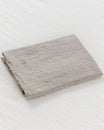
The sheets that actually serve your sleep are lower thread count, percale weave, organic cotton. They feel a little crisper. They breathe. They don’t trap the microclimate your body is trying to manage overnight. It’s one of those cases where the less marketed option is genuinely the better one.
The Comforter Nobody Wants to Give Up
This is the one we see most often at Resthouse.
Someone has done the work. They’ve invested in a natural latex mattress with wool and cotton layers. They understand the breathability argument. They’re committed to sleeping better. And then they climb into bed and pull their old down comforter over themselves because it’s familiar, it feels luxurious, and honestly it still seems fine.
But then heat rises. All night long the body is generating warmth and the mattress below is doing its job, wicking moisture, regulating temperature, allowing air to move. And then that heat hits the down comforter above and stops. Down is an exceptional insulator, which is exactly the problem. It traps warmth rather than managing it. The heat your natural mattress is trying to help your body release has nowhere to go. So, it builds up and you end up overheating, waking up to kick the covers off.
Down alternative comforters are often presented as the modern solution. What’s inside them is almost always polyester fill designed to mimic the loft of down. Polyester doesn’t breathe. It doesn’t wick moisture. It doesn’t regulate temperature. It creates the same problem in a lighter, more marketable package.
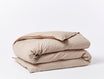
The layer above you matters as much as the layer below you. A wool comforter manages heat and moisture the same way a natural mattress does. Wool fibres naturally insulate and regulate, ensuring you’re warm in the winter and cool in the summer. A wool comforter allows the whole system to work in harmony.
The Mattress Protector Problem
A mattress protector is a sensible thing to have. It protects your investment, keeps things hygienic, and extends the life of the mattress underneath.
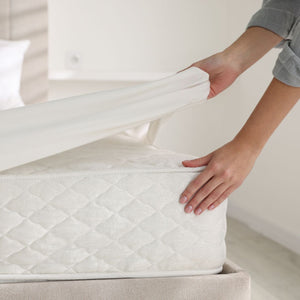
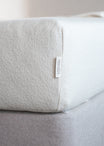
Most of them are labelled cotton on the outside and backed with polyester on the inside. That polyester layer sits directly between your body and the mattress, blocking the breathability of whatever natural materials are underneath. If you’ve invested in a natural mattress and covered it with a conventional protector, the mattress can’t breathe because the protector won’t let it.
What to look for is a protector that is genuinely natural throughout. Organic cotton or wool fill, no polyester backing. It will still protect the mattress, and it won’t sabotage the natural temperature cycle.
The Mattress Cover Nobody Thinks About
Here’s the layer most people never consider. The cover of the mattress itself.
Conventional mattresses have thick quilted covers made primarily from polyester. That cover is the first thing your body’s heat and moisture encounters. If it’s polyester, it stops there. The natural materials inside the mattress, if there are any, never get a chance to do their work.
Memory foam compounds this further. The foam doesn’t breathe, the cover doesn’t breathe, and the result is a sleep surface that holds everything the body produces overnight in a sealed synthetic environment.
It reframes the mattress conversation entirely. It’s not just about firmness or pressure relief or reviews. It’s about whether the materials can actually interact with your body the way your body needs them to.
The System Either Works or It Doesn’t
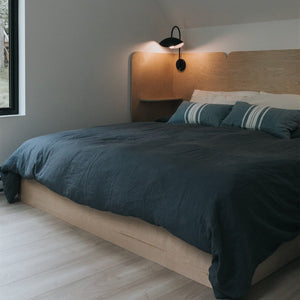
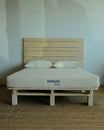
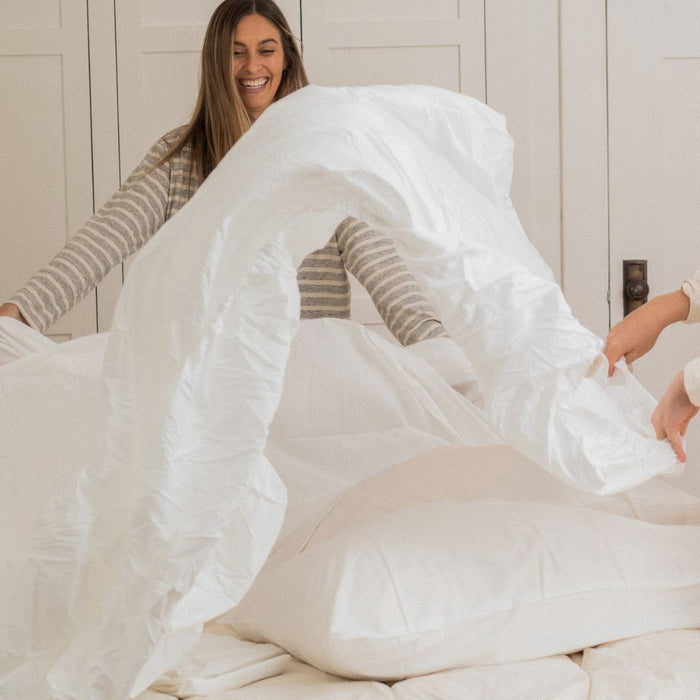
The goal is a bed that breathes from the mattress surface to the outermost layer. Natural latex at the base. A breathable natural protector. Low thread count organic cotton sheets. A wool comforter sized and weighted for the season and the sleeper. Natural fill pillows in organic cotton covers.
When all of those layers are working in the same direction the difference isn’t subtle. It’s the kind of sleep that makes you wonder what you were accepting before.
At Resthouse this is what we mean when we talk about the Kakun Sleep Ecosystem. Not just a mattress. The whole system, built from the bottom up, with every layer earning its place.
Written by Chris Manley
Founder of Resthouse Sleep